STATE 01 / 03
Steam
Forty minutes at 98°C. Lignin — the natural adhesive holding the fibers rigid — relaxes, and for a short window the wood gives itself permission to bend.
TEMP 20→98°C / RH 45→100%MAGEWA FORMING WORKS — NOSHIRO, AKITA, JAPAN
Wood bends when the conditions are right.
Akita cedar, milled to 6.5 mm. Steamed at 98°C for 40 minutes. This page replays the exact conditions that turn a flat board into a magewappa — a Japanese bentwood lunchbox. You drive it by scrolling.
FORMED BY STEAM*
No glue. No mold. No heat press. Just water, heat, and the grain direction an 80-year-old cedar has been rehearsing since before this workshop existed.
*No two cedars are alike, so no two bends are either. Every number on this page is a workshop average. Your box will finish slightly outside it — that is not a defect.
THE FORMING SEQUENCE
Three states follow. Scrolling advances the process; the readouts sweep through the workshop's measured ranges.
STATE 01 / 03
Forty minutes at 98°C. Lignin — the natural adhesive holding the fibers rigid — relaxes, and for a short window the wood gives itself permission to bend.
TEMP 20→98°C / RH 45→100%STATE 02 / 03
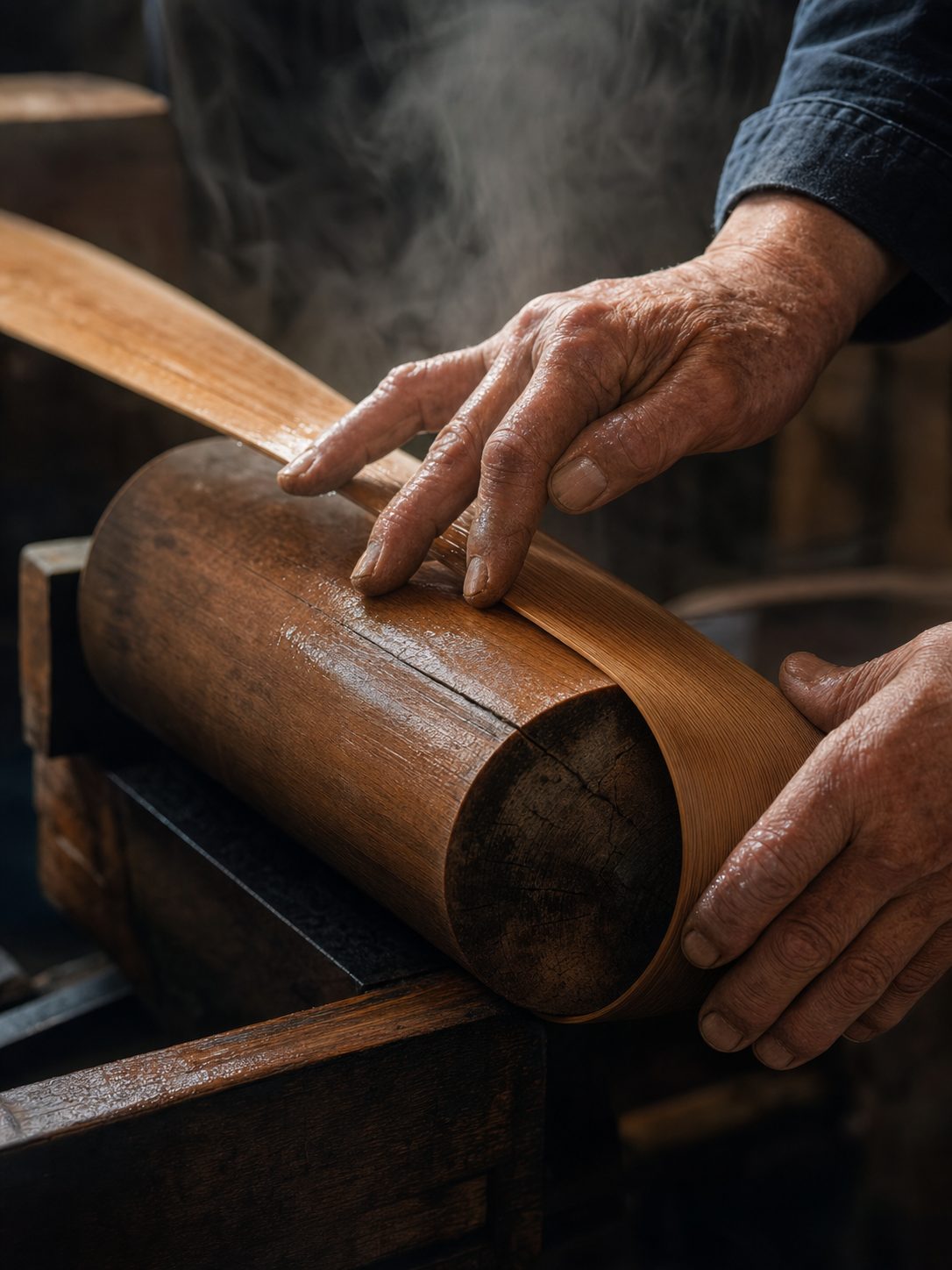
Ninety seconds out of the steam is all you get. The board is wrapped around a core log called a goro, thumbs reading the tension in the grain, bent to R52 in one committed motion.
RADIUS ∞→R52 / WINDOW 90sSTATE 03 / 03
Clamped in a form for 168 hours. As moisture falls from 38% to 10%, the wood re-learns the curve as its own shape — permanently.
MOISTURE 38→10% / 168hSEQUENCE COMPLETE
The bent wall is stitched closed with cherry bark and becomes an oval box. Everything after this point is no longer machine work.
CURVATURE OBSERVATION
A 52 mm bend radius is the tightest curve that holds 480 ml of rice and still fits an adult hand. Tighter, and the fibers crack. Looser, and you own a bucket, not a lunchbox.
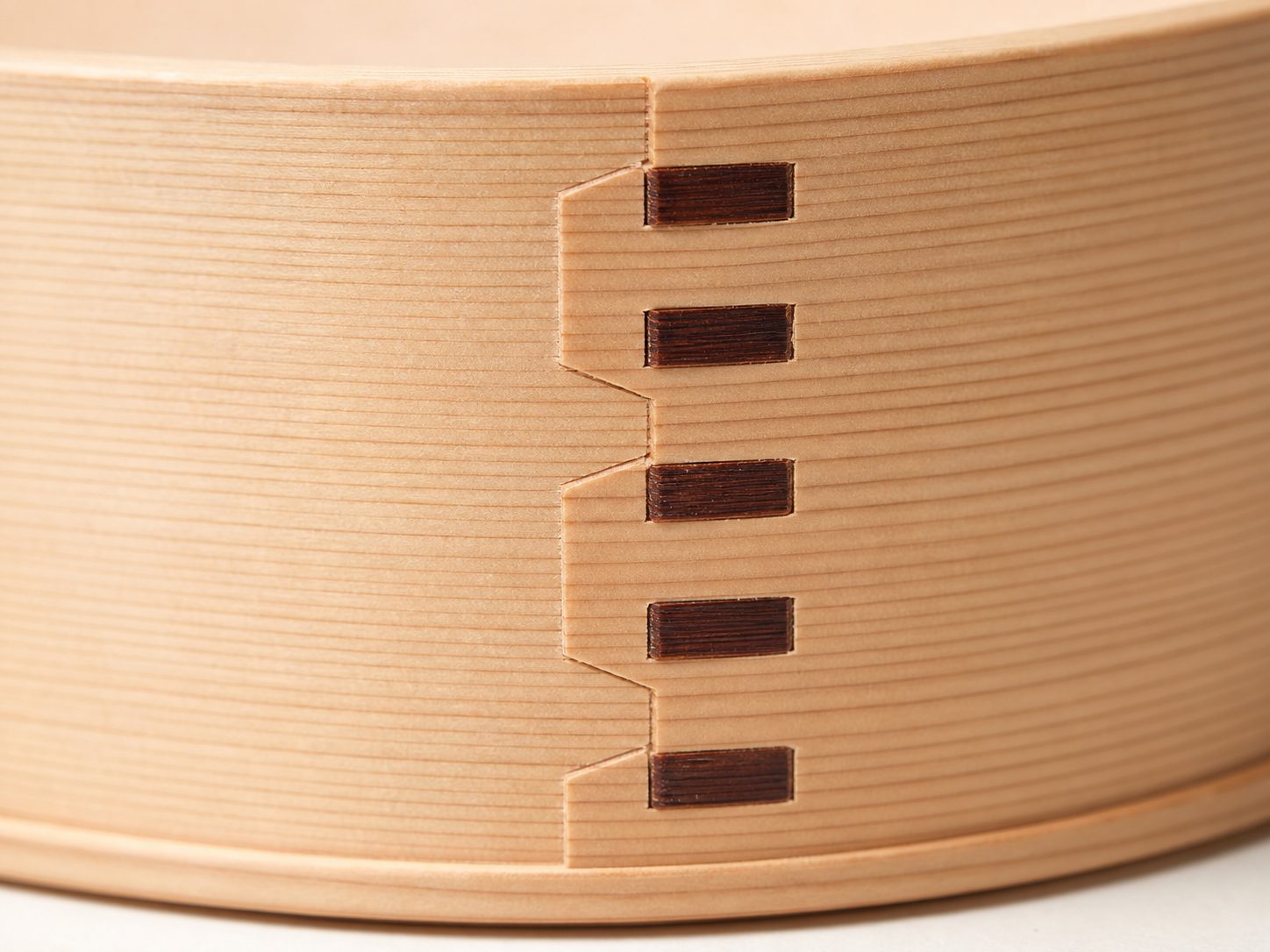
Below this, even straight grain cracks. Products keep a 1.4× safety margin
No adhesive — 14 stitches of mountain-cherry bark. If one fails, it can be re-stitched
How far the curve relaxes after drying. The forms are cut tighter to compensate
AIR-DRIED 36 MONTHS
A kiln dries cedar in three days. We take three years, because drawing the water out without collapsing the cells is what makes a board bend honestly when steamed.
Tight-grained Akita cedar. Only straight grain with growth rings around 1 mm wide becomes a wall
Stacked and left to the Noshiro wind until moisture drops below 15%
One board in eight makes the cut for walls. The rest becomes lids, bases, and kiln fuel
No synthetic adhesives in the body. Rice paste and cherry bark — that is the entire bill of materials
We publish everything that can be measured. What you are paying for is the part that can't.
FIELD RECORDS
Years in service and repair history feed directly back into how the next box is made.
| ID | USER | YEARS | REPAIRS | NOTE |
|---|---|---|---|---|
| R-114 | Office worker, Tokyo | 6 | 1 | Cold rice actually tastes better in it. Molded it once in August; came back re-planed |
| R-089 | Forester, Akita | 11 | 2 | Second box in the family — my father's is still in service. The amber patina only shows up after year ten |
| R-201 | Teacher, Nagano | 3 | 0 | My kid loves the sound of the lid. Not a snap — a soft knock |
| R-052 | Nurse, Fukuoka | 8 | 1 | It exists for the rice after a night shift. One re-stitch in eight years |
| R-177 | Architect, Osaka | 2 | 0 | The R52 curve is better than my drawings. Yes, I measured the section. Occupational hazard |
The workshop services every box it has made — re-stitching, re-planing, hoop replacement. We hold records on boxes past their twentieth year.
PRODUCT LINE
Identical process throughout. What changes is the radius, the number of turns, and how much rice comes home with you. Ships worldwide from Akita.
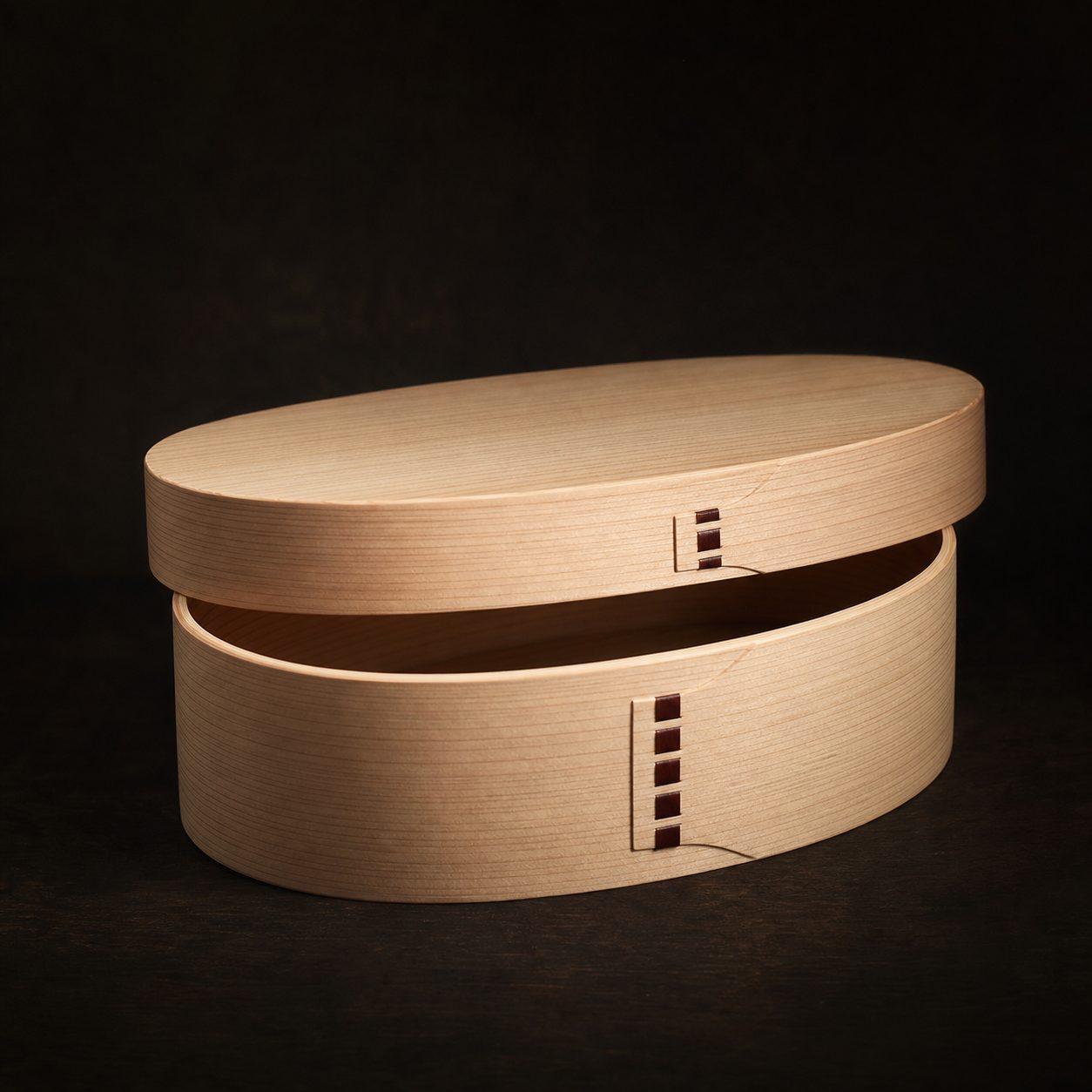
The classic. R52. Rice to sides in a six-to-four split
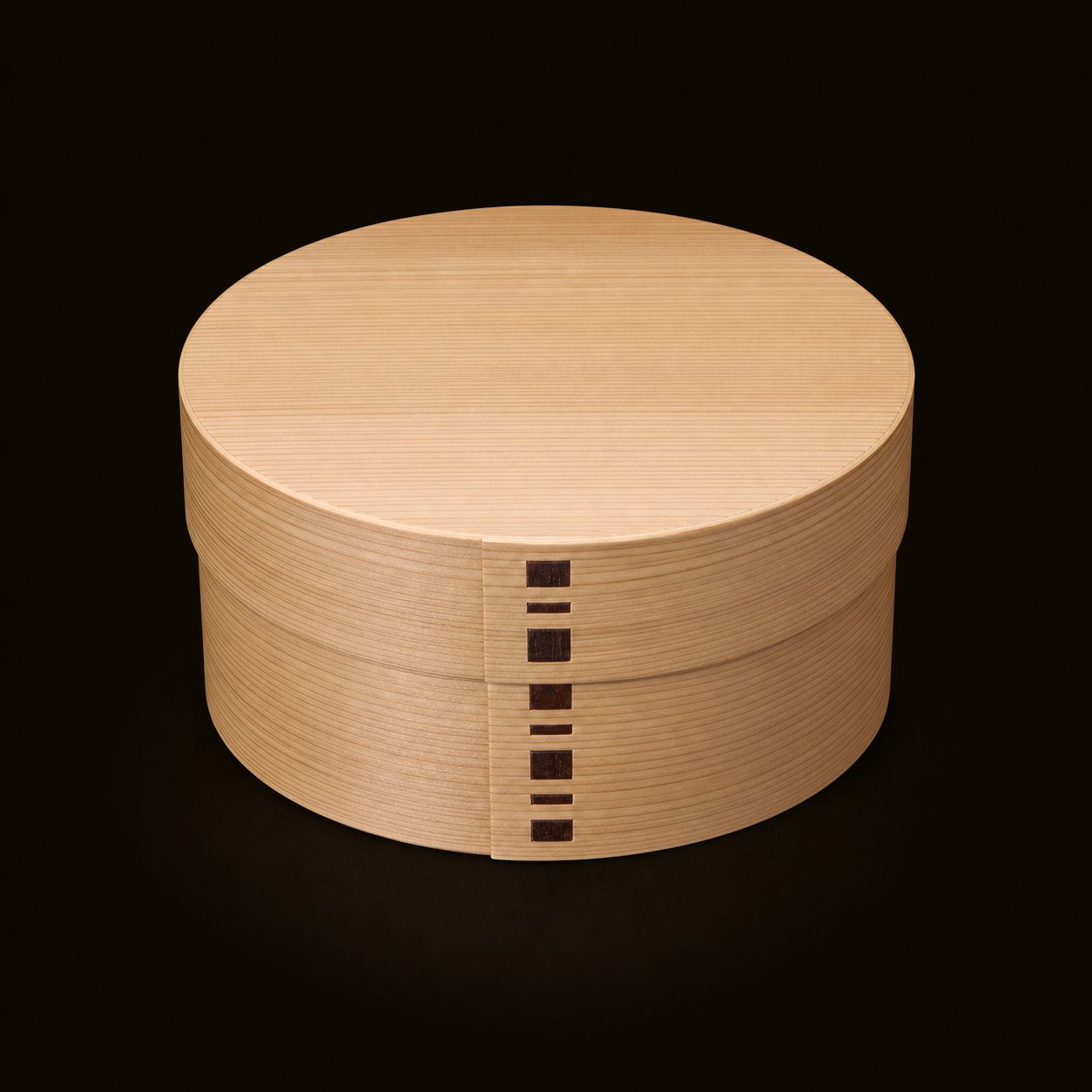
Constant curvature, R58. A deep bowl for noodles and rice bowls
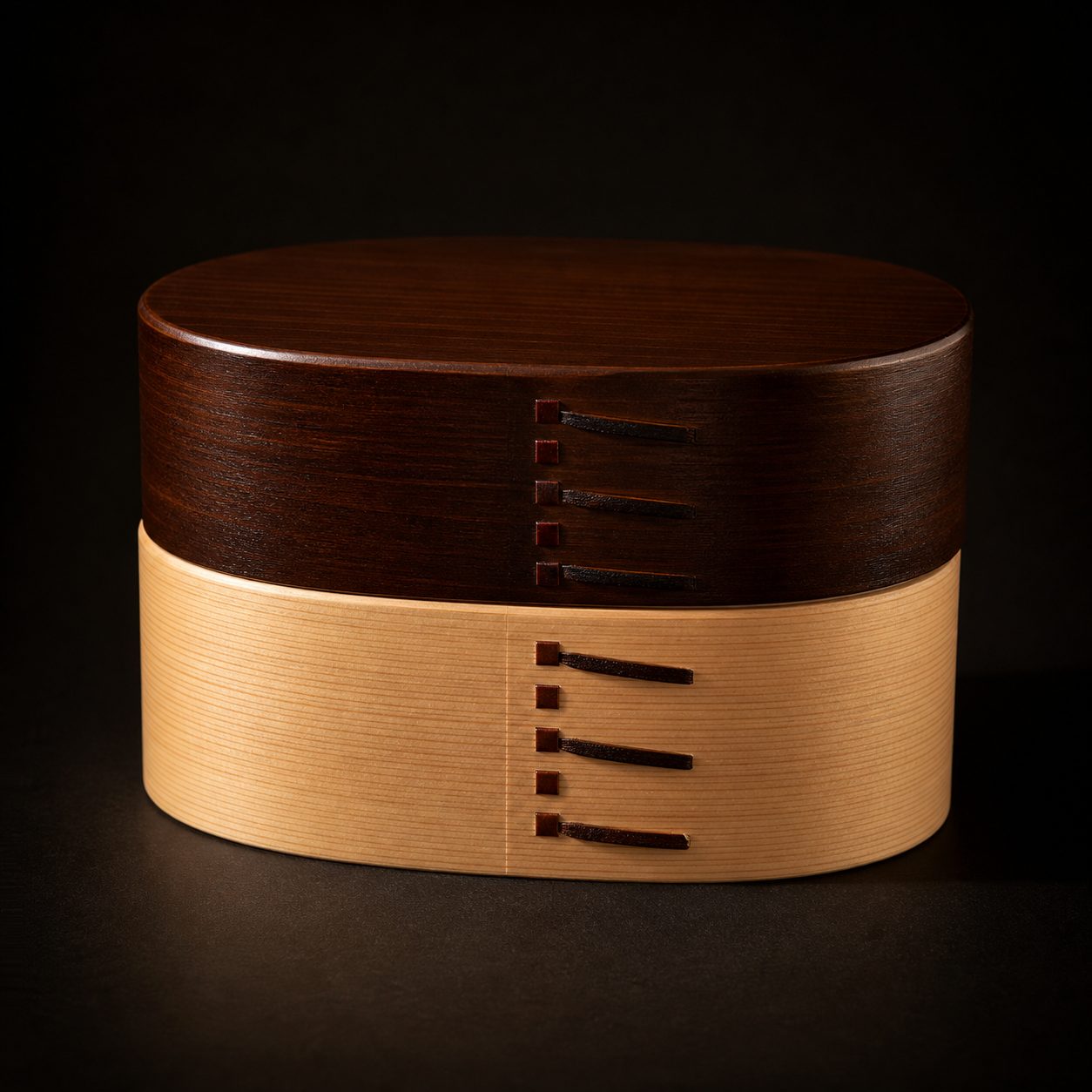
Two ovals stacked. The shallow 280 ml upper tier is for pickles and something sweet
Process parameters across the three products
| PARAMETER | 01 OVAL | 02 ROUND | 03 TWO-TIER |
|---|---|---|---|
| Capacity | 480ml | 560ml | 480+280ml |
| Bend radius | R52 | R58 | R52 / R48 |
| Steam time | 40min | 40min | 40min ×2 |
| Turns | 1.75 | 1.75 | 1.75 ×2 |
| Bark stitches | 14 | 16 | 26 |
| Finish | Bare cedar | Bare cedar | Wiped lacquer |
| Fixture dry | 168h | 168h | 168h |
| Price (JPY) | ¥14,300 | ¥16,500 | ¥23,100 |
OPEN FORMING RECIPE
If secrecy could protect this work, a machine would already be doing it. Copy the recipe. It won't come out the same — that's the point.
Follow this recipe to the letter and you still won't get our bender's box. That gap is the product.
# MAGEWA FORMING RECIPE v3.2
# Akita cedar, straight grain, wall stock

[material]
species        = cryptomeria japonica (akita)
grain          = masame / straight
age            = 80y+
thickness      = 6.5 mm
moisture       = 15 %

[steam]
temp           = 98 °C
time           = 40 min
humidity       = 100 %RH

[bend]
radius         = R52 mm
window         = 90 s
turns          = 1.75

[dry]
fixture        = kata / oval
time           = 168 h
target         = 10 ±2 %

[bind]
method         = yamazakura bark
stitches       = 14

# NOTE: following these steps exactly
# will not produce the same box.